A verdict has been delivered in a trial that drew national attention and raised concern about train staff safety. Meanwhile, VW bosses are eyeing huge restructuring, with unions vowing to fight any closures. DW has more.
What you need to know
A man has been sentenced to 10 years in prison over the killing of a train conductor during a ticket check
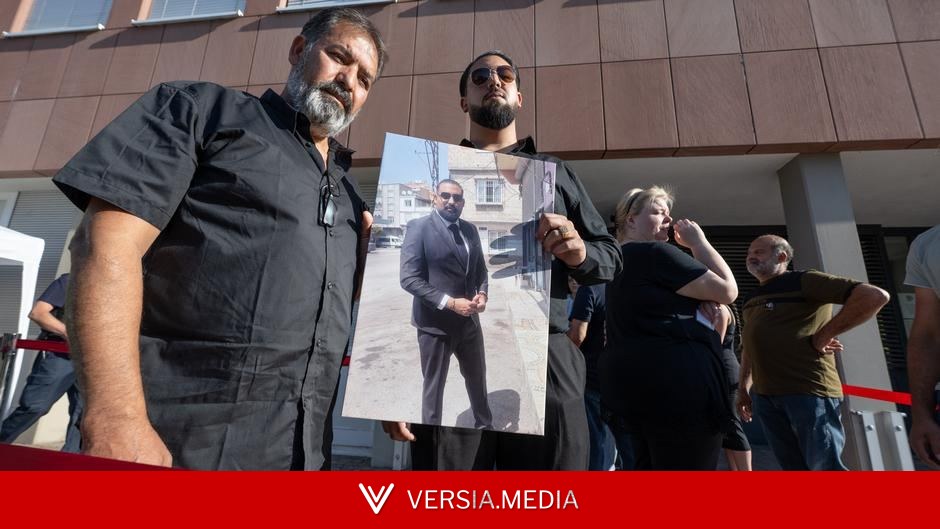
The family had wanted a murder conviction and boycotted the verdict
Germany's largest union is protesting as Volkswagen considers cutting 100,000 jobs worldwide
The plans could include closing three German VW plants and one Audi factory
Here is a roundup of the latest headlines from Germany on Thursday, July 8:
Christine Wunnicke wins Georg Büchner literary award
German author Christine Wunnicke has been awarded the Georg Büchner Prize , widely regarded as one of the most prestigious awards for German-language literature .
The prize is presented by the German Academy for Language and Literature, whose jury praised Wunnicke's "consistently surprising and masterfully crafted body of work, set in such diverse locations as Hollywood, Nagasaki, and Paris.”
Wunnicke’s novels are set in the 17th, 18th and 19th centuries, blending historical facts with fiction.
Her 2020 novel "The Lady with the Painted Hand," follows a fictional meeting between the real-life German mathematician Carsten Niebuhr and Musa, a Persian maker of astrolabes. Stranded on an island off the coast of India, the two men must find ways to communicate despite their different languages and cultural backgrounds.
In her most recent novel "Wachs" ("Wax"), which is set in Paris amid the backdrop of the French Revolution, Wunnicke tells the story of young girl who is determined to buy corpses in order to become an anatomist.
"Christine Wunnicke's brilliant art reveals the fictional within the supposedly historical, thereby offering a revealing perspective on European scientific and colonial history without denying empathy for her characters," the jury's explanation reads.
The Büchner Prize has been awarded annually since 1951. According to its charter, it honors authors "writing in the German language whose work is considered especially meritorious and who have made a significant contribution to contemporary German culture."
The award carries a €50,000 prize, and will be handed out on October 24 in Darmstadt.
Germany and Denmark to keep border controls
German Interior Minister Alexander Dobrindt confirmed on Thursday that the country's border with Denmark will maintain immigration controls for the foreseeable future.
"For us, border controls play an important role in curbing illegal migration," Dobrindt said. While admitting that Denmark plays only a small role in irregular immigration to Germany , he said that authorities had uncovered some people-smuggling operations at the border in the past.
Despite both belonging to the Schengen free-movement area, the two countries have had regular controls at their shared border since September 2024.
The news comes just after the government also decided to extend similar controls at the border with Austria until at least September 15.
Germany and Switzerland arrest five in people-smuggling probe
Investigators in Germany and Switzerland have arrested five men suspected of belonging to a people-smuggling gang accused of bringing more than 700 people into Germany.
Prosecutors in the Bavarian city of Landshut and Germany's Federal Police said one suspected organizer was detained in Geneva, while four other men were arrested in Dortmund, Berlin and the town of Delmenhorst near Bremen .
The suspects, aged between 25 and 45, are Syrian and Lebanese nationals and are believed to belong to the upper leadership of the criminal organization, police said.
They are accused of organizing the smuggling of 164 people, including 13 children, between October 2023 and March 2024.
Authorities said the wider gang is suspected of illegally bringing more than 700 people into Germany and making millions of euros from the operation.
The investigation began in 2023 after 30 people were found being transported on the loading areas of vans and trucks in the Passau region of Lower Bavaria in southern Germany. Investigators currently believe those being smuggled were put in mortal danger.
Two other alleged gang members have already been sentenced to several years in prison by regional courts in Landshut and Passau. Four more members are in pretrial, criminal or extradition detention in Greece, Austria, Slovenia and Kosovo.
Top court clears way for Bundestag vote on health insurance bill
Germany's Federal Constitutional Court in Karlsruhe has cleared the way for the Bundestag to vote this Friday on a bill aimed at stabilizing statutory health insurance contributions .
The court rejected urgent applications from opposition lawmakers Janosch Dahmen of the Green Party and Ates Gürpinar of the socialist Left Party to remove the bill from the parliamentary agenda.
The two lawmakers had filed the applications in Karlsruhe on Wednesday, arguing that Chancellor Friedrich Merz's conservative-led government was rushing the bill through parliament and had submitted amendments too late for serious scrutiny.
They said the process violated their right to equal participation in parliamentary decision-making. The court did not immediately give reasons for its decision, saying its explanation would be sent separately to the parties involved.
The government wants to pass the reform on the final sitting day before the summer recess. It remains unclear whether Germany's upper chamber, the Bundesrat, will also allow the bill to pass Friday, with the federal government and the states still at odds over changes to hospital finances.
Health care in Germany: Inside a system at breaking point
To view this video please enable JavaScript, and consider upgrading to a web browser that supports HTML5 video
German exports see unexpected boost in May
Despite economic uncertainty caused by the Iran conflict and ongoing US tariffs , German exports rose unexpectedly in May, extending their growth streak to a fourth consecutive month.
Exports increased by 0.9% compared with April, according to preliminary figures from Germany’s Federal Statistical Office, reaching a total of €137.9 billion ($157 billion). That number is 6.1% higher than in May 2025.
Moreover, Germany's trade surplus widened to €19.1 billion in May, up from €14.7 billion in April, helped by 2.5% decline in imports over the same period.
The largest growth came in exports to the US — the top destination for German products — where exports rose by 23.1% compared to April. Exports to China also notched a 7.1.% increase, while exports to EU countries fell by 1.1.%.
"Exports are being helped by the fact that the US economy continues to steam ahead," said Alexander Krüger, chief economist at ABN Amro Germany.
Economists nevertheless urged caution. "The robust growth in exports to the United States should not be interpreted as a reversal of the trend in transatlantic trade," wrote Thomas Gitzel, Chief Economist at VP Bank.
"Trade barriers have increased as a result of Trump's tariffs, and at the same time, many companies are relocating their production directly to the US” he added. In the long run, this could mean less trade between the US and Germany .
The US currently imposes a 15% baseline tariff on EU goods .
The International Monetary Fund forecasts that the German economy will grow by 0.7% in 2026.
US Tomahawks: Germany closes a strategic gap
One day after the NATO summit in Ankara, German Chancellor Friedrich Merz (CDU) made a surprising announcement: The German government would purchase US Tomahawk medium-range missiles and station them in Germany. An agreement to this effect had been reached with the US government during the summit in Ankara, Merz said told the Bundestag.
"This closes an important strategic gap in our defense," the chancellor explained. At the same time, Germany would continue to work on developing its own European systems, he announced.
Originally, the US intended to station Tomahawk cruise missiles in Germany as a gesture of support among allies. This had been agreed upon by then-Chancellor Olaf Scholz (SPD) and US President Joe Biden in 2024. The deployment was intended to bridge the gap until comparable European weapons were developed.
But in May 2026, US President Donald Trump scrapped his predecessor's plan, and announced the withdrawal of at least 5,000 US troops from Germany . The US argued it did not have enough Tomahawks to go through with stationing them in Germany, according to a US statement.
The German government therefore had to look for alternatives and began negotiations to purchase Tomahawks. With a range of up to 2,500 kilometers (1553 miles), they can reach Russian territory from Germany . Their deployment is seen as a key element in deterring Russia. Moscow has stationed Iskander cruise missiles in its Kaliningrad exclave, which can be armed with nuclear warheads.
European countries do not yet have comparable weapons of their own and are therefore reliant on US capabilities for their defense. Developing a European system of their own is a high priority in Berlin and other European capitals, but is likely to take quite some time.
German tourist dies in South Tyrol hiking fall
A German tourist has died after falling about 300 meters (roughly 1,000 feet) while hiking in South Tyrol, Italian mountain rescuers said.
The 66-year-old stumbled on a high-altitude trail near the 2,243-meter Pretzkopf mountain on Wednesday while walking the Pfunderer Höhenweg hiking trail with a companion.
An emergency doctor flown in by helicopter could only confirm the man's death. Rescue officials did not say where in Germany he was from.
The two men had been hiking on the popular route near Sterzing in northern Italy and planned to spend the night at a nearby alpine pasture. His companion raised the alarm from there after the fall.
The body was flown down to the valley by helicopter. Police opened an investigation, as is routine in such cases, while the exact cause of the accident was initially unclear.
The Pfunderer Höhenweg has seen several accidents in recent years, some of them fatal.
AfD accuses Merz government of failed reform delivery
The far-right Alternative for Germany (AfD) has accused Chancellor Friedrich Merz and his centrist coalition government of failing on reform, and losing public trust.
"Nobody can rely on your word," AfD co-leader Tino Chrupalla said after Merz delivered his own assessment of the government's record so far.
Merz has promised a "reform summer" aimed at overhauling economic, health and social policy, but Chrupalla said the government had drifted from one reform deadline to the next.
"The costs of failure are rising every day as long as you are chancellor," he said, adding that the loss of trust "in the word of this government can hardly be quantified."
Chrupalla criticized the coalition's health and social policy in particular. He said the planned requirement for a sick note from the first day of illness showed "that you really have zero empathy, especially for citizens."
He added: "Wherever we look, you are planning new burdens," saying chronically ill people and families were being made to carry "the heaviest burdens," especially in the health sector.
Protests, arrests at German far-right AfD congress
To view this video please enable JavaScript, and consider upgrading to a web browser that supports HTML5 video
Germany reports over 5,000 excess deaths due to heat
Germany's main public health institute has reported that over 5,000 people have died of heat-related causes in 2026, most of them during a June heat wave that paralyzed Europe for over a week.
At the same time, the EU's climate change service reported that this past June was the hottest on record for the bloc.
Merz defends coalition record and urges patience on reform
German Chancellor Friedrich Merz has defended the first-year record of his coalition of the conservative CDU/CSU bloc and the center-left Social Democratic Party (SPD), saying it has set Germany on course for a "real new beginning."
In a government statement to the Bundestag, Merz said his government was delivering on plans for "an economically strong, socially just Germany capable of defending itself at home and abroad."
Merz pushed back against claims that the political center was failing to act, saying: "The center delivers, it works."
"The answers offered by radical parties, whether from the left or the right, may sound seductive. But they do not build; they destroy. They divide our country and, were they to assume political responsibility in Germany, would lead it into the abyss," he said.
Merz asked for patience on reforms to areas such as social security, saying the government was tackling problems that had been left unresolved for decades.
He pointed to "encouraging signs" in the economy, including rising production, growing order books and 3,000 new companies founded in Germany in the first half of the year.
"Yes, this is not yet the breakthrough," Merz said, adding that some sectors remained in deep crisis. "We must not ease up, we must continue to work hard, we must get even better."
What are the German government's pension, labor reforms?
To view this video please enable JavaScript, and consider upgrading to a web browser that supports HTML5 video
Nearly four in five Germans fear for finances amid global crises
A large majority of Germans are worried about their financial situation as inflation and international crises continue to weigh on households, a survey has found.
The Crif-commissioned study questioned 5,000 consumers in Germany, Ireland, Italy, Poland and the UK. Around 1,000 of the people were in Germany.
Some 79% of respondents in Germany said they were concerned about their finances, slightly above the 78% average across the five European countries surveyed.
In Germany, 28% expect their personal financial situation to worsen over the next 12 months. Another 38% expect to have less money left at the end of the month, while 18% fear they may no longer be able to pay bills on time. Seven percent said they were worried about being unable to cover rent or mortgage payments.
Crif Managing Director Frank Schlein said the figures showed many consumers still feel under financial strain despite early signs of economic stabilization.
"The constant confrontation with new burdens means financial caution has become the new normal for many," Schlein said.
A majority of respondents in Germany, 51%, said they want to tackle financial uncertainty by saving more. Some 32% said they plan to cut spending slightly, while 19% said they intend to reduce it significantly.
Merz announces plans to acquire Tomahawk cruise missiles
German Chancellor Friedrich Merz addressed the Bundestag on his return from the NATO summit this morning.
He announced that his government would be purchasing Tomahawk cruise missiles from the US and stationing them in Germany, saying this closed an "important" gap in the country's defensive capabilities.
He also touted his coalition's contentious summer reform package and tried to land some hits against the AfD and the Left Party.
Read the full story here .
Volkswagen braces for union clash over reported mega-restructuring
Volkswagen bosses are meeting Thursday to discuss what could become the biggest restructuring in global auto industry history, with unions preparing protests against any mass job cuts.
The German auto giant is already cutting 50,000 jobs in Germany by 2030 under a deal reached with unions at the end of 2024. But CEO Oliver Blume is now considering cutting 100,000 jobs worldwide, as well as closing three German VW plants and an Audi factory, Manager Magazin reported, citing company sources.
The head of Germany's largest union IG Metall, Christiane Benner, and VW works council head Daniela Cavallo warned they would oppose such plans "with all our might."
The proposals would be difficult to push through. VW's supervisory board is usually evenly split between worker and shareholder representatives. However, the workers' side currently has a majority after a recent resignation.
Meanwhile, the state of Lower Saxony holds a blocking minority. No major announcement is expected immediately after Thursday's meeting, which is likely to mark the start of lengthy negotiations.
Volkswagen is under pressure from US tariffs, weaker electric vehicle margins and fierce competition in China, where its deliveries have fallen to their lowest level since 2011.
Blume has warned that VW's old business model "no longer works," citing trade tensions, regulation and high costs in Europe. He has also said the group cannot compete with underused factories as Chinese rivals expand into Europe with more efficient plants.
Can Volkswagen's 'legacy' help restore its former glory?
To view this video please enable JavaScript, and consider upgrading to a web browser that supports HTML5 video
Court hands man 10-year sentence for fatal attack on German train conductor
A German court has sentenced a 26-year-old man to 10 years in prison for fatally attacking train conductor Serkan Calar during a ticket inspection in the western state of Rhineland-Palatinate.
Prosecutors had said the Greek defendant, who lives in Luxembourg, repeatedly punched the 36-year-old conductor in the head after he was told to leave a regional train near Landstuhl because he had no ticket and refused to identify himself.
Calar lost consciousness at the scene and died two days later in hospital from a brain hemorrhage. The attack was fully captured by security cameras on the train.
The prosecution had called for a 12-year prison sentence for bodily harm resulting in death, saying prosecutors did not see intent to kill.
The defense argued the case should be treated as a less serious form of bodily harm resulting in death and asked the regional court in Zweibrücken for a sentence "at the lower end" of the possible range.
Lawyers for Calar's family have pushed for a murder conviction, arguing the attack was driven by base motives.
The verdict is not yet final and can be appealed.
Lawyers representing the victim's family had accused the defendant of murder driven by base motives and demanded a life sentence. The family's attorney said they would challenge any sentence shorter than 12 years.
Germany: Front-line workers face growing abuse, violence
To view this video please enable JavaScript, and consider upgrading to a web browser that supports HTML5 video
Welcome to our coverage
Guten Tag! Welcome to our Germany coverage from the DW newsroom in Bonn, on the banks of the Rhine River.
You join us as a German court hands down a 10-year prison sentence in a case that has drawn nationwide attention.
Train conductor Serkan Calar died after prosecutors say he was repeatedly punched in the head during a ticket inspection in the western state of Rhineland-Palatinate.
Prosecutors sought a 12-year sentence for bodily harm resulting in death, saying the attack was clearly documented on security cameras but that they do not see intent to kill.
Calar's family disagreed and could appeal the sentence.
Stay with us for this and more of the stories that Germany is talking about today.